Pros (Advantages):
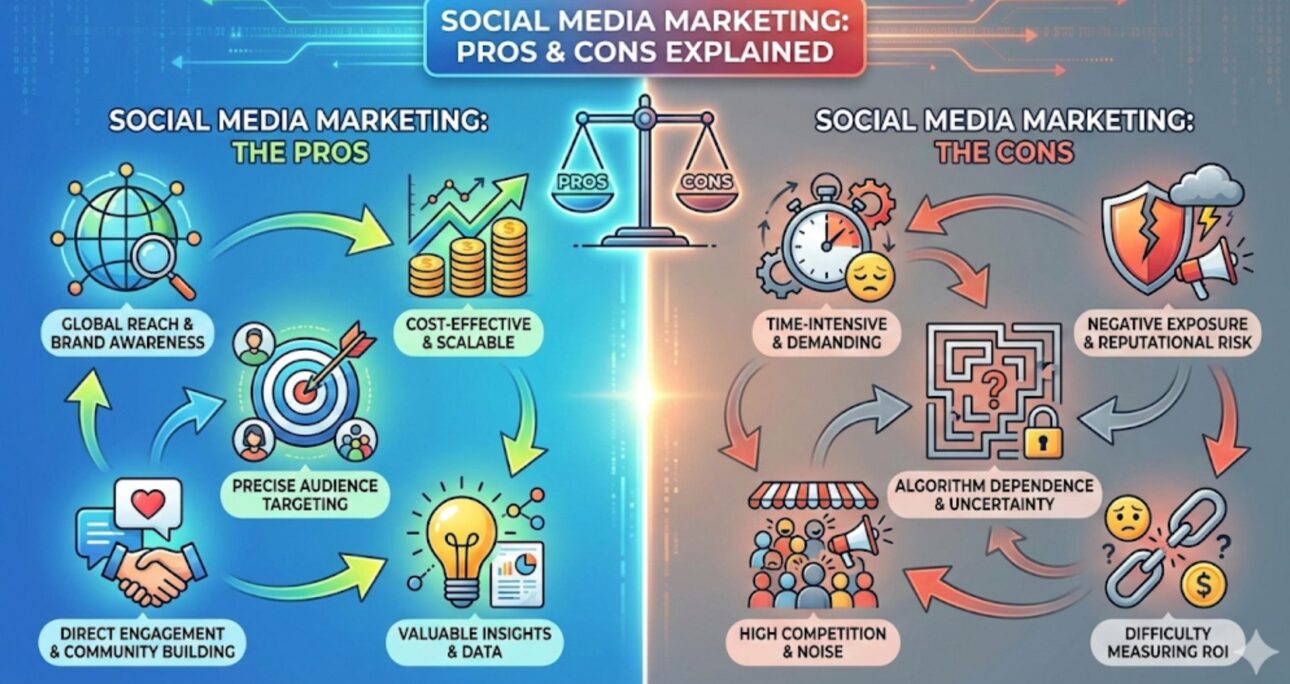
- Wider Reach and Audience Targeting: Social media platforms offer access to a massive global audience. Advanced targeting options allow businesses to pinpoint specific demographics, interests, behaviors, and even locations, ensuring marketing messages reach the most relevant potential customers.
- Cost-Effectiveness: Compared to traditional advertising channels like print or television, social media marketing can be significantly more affordable. Organic reach is free, and paid advertising campaigns can be scaled to fit various budgets, offering a high return on investment (ROI).
- Enhanced Brand Awareness and Recognition: Consistent presence and engaging content on social media can significantly boost brand visibility. Users are exposed to your brand repeatedly, leading to greater recognition and recall.
- Direct Customer Engagement and Relationship Building: Social media facilitates two-way communication. Businesses can interact directly with customers, answer questions, address concerns, and gather feedback in real-time. This fosters a sense of community and builds stronger customer relationships.
- Increased Website Traffic and Lead Generation: By sharing links to website content, product pages, or landing pages, social media can drive qualified traffic to your business website. This can lead to higher conversion rates and more lead generation.
- Valuable Market Insights and Analytics: Social media platforms provide a wealth of data about audience behavior, content performance, and competitor activity. This information is invaluable for understanding your market, refining your strategies, and making data-driven decisions.
- Improved Customer Service: Social media can serve as an effective channel for customer support. Prompt and helpful responses to inquiries and complaints can significantly improve customer satisfaction and loyalty.
- Content Virality and Shareability: Engaging and compelling content has the potential to go viral, reaching an exponentially larger audience without additional ad spend. User-generated content and shares can amplify your marketing message organically.
- Competitor Analysis: Observing competitors’ social media strategies, content, and audience engagement can provide valuable insights into industry trends and identify potential opportunities or threats.
- SEO Benefits: While not a direct ranking factor, social media signals (shares, likes, comments) can indirectly influence search engine optimization (SEO) by increasing brand visibility and driving traffic to your website.
Cons (Disadvantages):
- Time and Resource Intensive: Developing a successful social media strategy requires significant time and effort. This includes content creation, scheduling, community management, monitoring, and analytics. Dedicated personnel or agencies may be needed.
- Negative Feedback and Reputation Management: Social media is a public forum, and negative comments or reviews can spread quickly and damage a brand’s reputation. Businesses need to have robust strategies for handling criticism and managing online crises.
- Algorithm Changes and Decreased Organic Reach: Social media platforms frequently update their algorithms, which can drastically reduce the organic reach of posts. This often pushes businesses to rely more on paid advertising to maintain visibility.
- Need for Constant Content Creation: To stay relevant and engaging, businesses must consistently produce fresh and high-quality content. This can be challenging and may require a dedicated content team or a consistent flow of creative ideas.
- Potential for Low ROI if Not Done Correctly: While potentially cost-effective, a poorly executed social media strategy can yield little to no return on investment. Without clear goals, understanding of the target audience, and effective tactics, resources can be wasted.
- Platform Saturation and Noise: The sheer volume of content on social media can make it difficult for brands to stand out. Cutting through the noise and capturing audience attention requires creativity and strategic planning.
- Privacy Concerns and Data Security: Businesses must be mindful of data privacy regulations and ensure the secure handling of customer information gathered through social media.
- Dependence on Third-Party Platforms: Businesses are reliant on the policies and functionality of social media platforms. Sudden changes or the discontinuation of a platform can significantly impact marketing efforts.
- Difficulty in Measuring Direct Sales and ROI: While metrics like engagement and reach are readily available, directly attributing sales to specific social media activities can be complex, making it challenging to definitively measure ROI.
- Risk of Misinformation and Brand Association: Brands can inadvertently be associated with controversial or inappropriate content shared by users or through targeted advertising if not carefully managed.